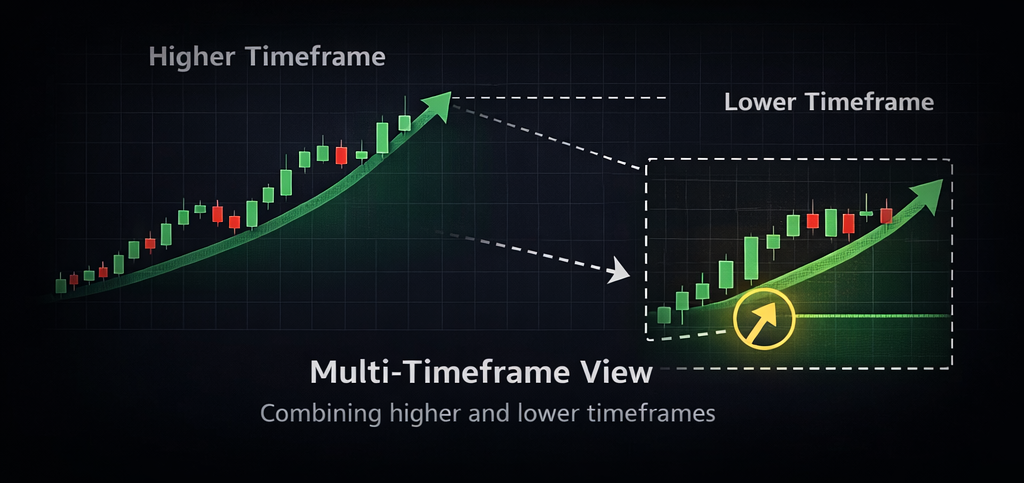
Timeframes
A timeframe is the “zoom level” of your chart (Daily, 4H, 1H, 15m, etc.).
Higher timeframes show the big picture (trend + major levels).
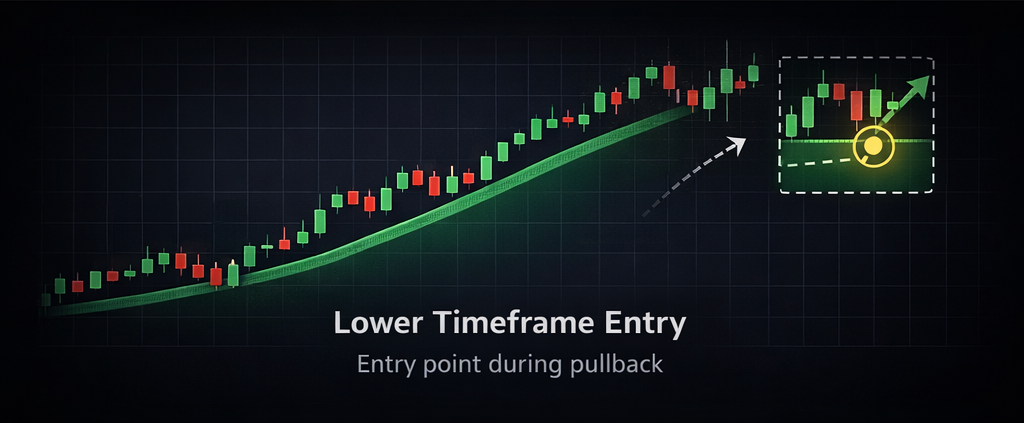
Lower timeframes show detail (entries + short-term noise).
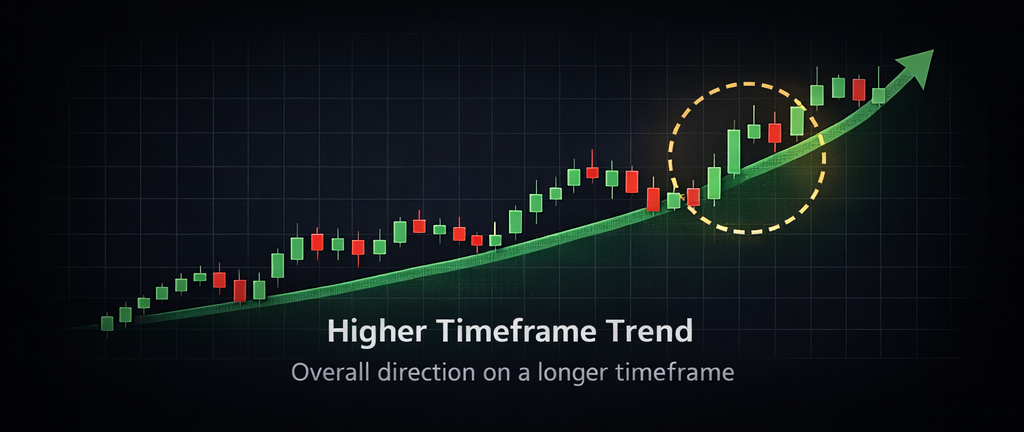
Start higher (Daily/Weekly) to mark the main trend and key support/resistance.
Then go lower (4H/1H) to refine levels and find better entries.
If signals conflict, the higher timeframe usually matters more.
A “breakout” on 5m can be irrelevant on the Daily chart.
A strong Daily trend can overpower short-term pullbacks.
Good trading decisions usually match the higher-timeframe direction.
- Using only one timeframe and missing context.
- Taking trades on tiny timeframes against the higher-timeframe trend.
- Changing timeframes until you find a signal you like (confirmation bias).
Helps you trade with context instead of guessing.
Improves level quality (Daily levels are usually stronger than 5m levels).
Helps reduce overtrading by focusing on the right “zoom level.”